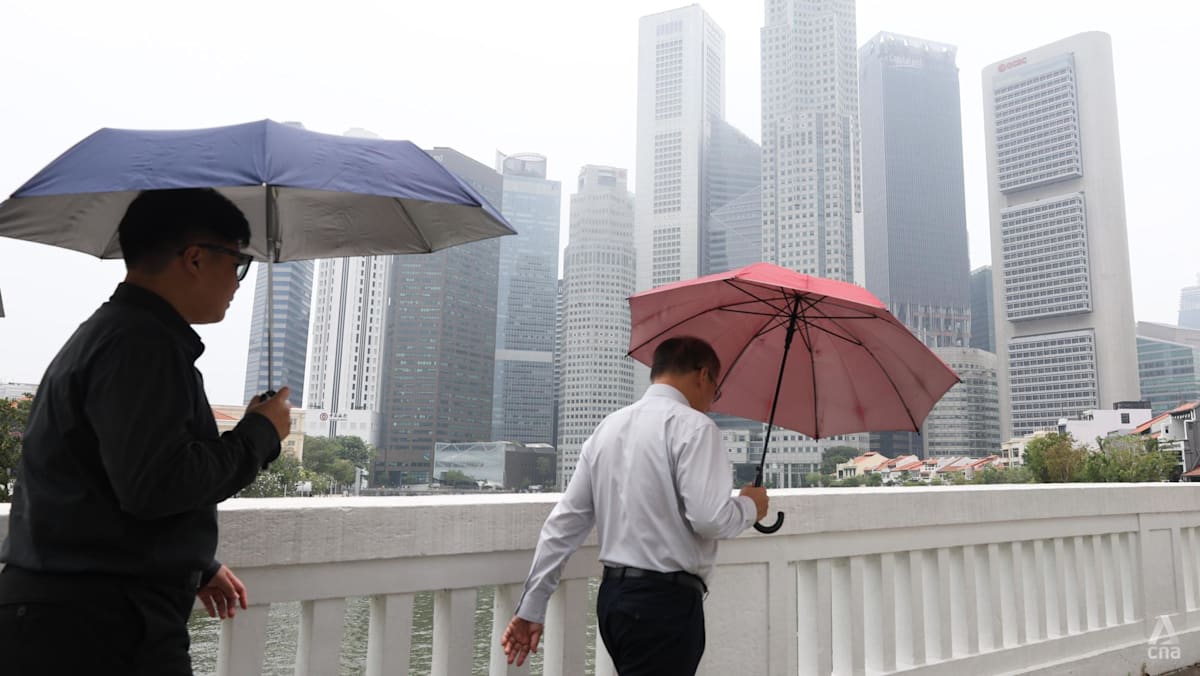
Air quality in Singapore improved on Thursday (Oct 22), with hourly PM2.5 readings returning to the normal band in every region by 2pm, according to CNA. The western part of the island was the last to recover, rejoining the other four regions at midnight. At 1pm, hourly PM2.5 readings across Singapore ranged from 17 to 40.
The 24-hour Pollutant Standards Index (PSI) told a slower story. Western Singapore remained in the unhealthy range at 101, while the other four regions stayed moderate, with readings between 72 and 88. Before Monday, Singapore had last seen moderate air quality on Oct 9, CNA reported.
Why it matters
The split between the two measures matters because they answer different questions. The one-hour PM2.5 figure reflects what is in the air at that moment, which is why the National Environment Agency (NEA) points the public to it when deciding on mask use and immediate outdoor activity. The 24-hour PSI averages conditions over a full day, so it can lag behind a short-term improvement — which is what Thursday's numbers show.
For residents, the practical effect is that the air they are breathing right now has cleared, even as the official daily index in the west still sits above the healthy threshold. The improvement follows a stretch of hazy conditions that began earlier in the week and prompted a government response on masks.
Who should take care, and how
NEA advises that when the 24-hour PSI is unhealthy, the elderly, pregnant women and children should cut back on long or strenuous activity outdoors. People with chronic conditions, including heart and lung diseases, should steer clear of such exertion altogether.
For immediate decisions, the Ministry of Health (MOH) guidance is tied to the one-hour PM2.5 readings. When those readings sit in the high band, vulnerable groups — the elderly, pregnant women and people with chronic heart or lung conditions — should stay indoors. Anyone who must go outside for short errands may wear a well-fitting N95 mask or an equivalent to limit exposure to haze particles.
At the very high band of 251 and above, healthy people should also keep outdoor activity to a minimum, and an N95 mask is an option for those who need to go out. MOH has said N95 masks are generally unnecessary for travelling between home and school or work, or while indoors.
The ministry has also cautioned that elderly people, pregnant women and those with severe heart or lung conditions should check with a doctor before using an N95 mask if they have trouble breathing, and that anyone who feels uncomfortable in one should take a break from wearing it.
Masks other than the N95 can help as well. According to MOH, KN95, FFP2 and KF94 masks are also effective at reducing exposure to haze particles. Surgical masks offer a barrier against larger irritant particles, which can ease discomfort and lower infection risk, but MOH recommends an N95 or equivalent when PM2.5 readings exceed 250 and a person needs to stay outdoors for several hours. Cloth masks do little to filter fine particles, though they can block larger irritants.
The public can check the HazeMaskGoWhere website for collection points and live updates on stock at mask vending machines.
Mask collection expands as the haze response widens
The air quality update comes alongside a widening government effort on masks. The Straits Times reported that Singaporeans aged 60 and above can collect masks from Oct 23, a measure announced by Minister Grace Fu to guard against the haze. The Business Times reported that the age threshold for distribution is being lowered as the programme expands, and that authorities will help retailers restock.
MOH had issued guidance on Oct 13 setting out which mask types offer protection against haze.
The haze itself has drawn attention to the regional picture. The Straits Times has examined why Singapore's anti-haze law has not succeeded in getting Indonesian companies to stop the fires behind the smoke, and the NEA published a haze situation update on 21 October.
What to watch: whether the 24-hour PSI in western Singapore drops back into the moderate band, and how smoothly the expanded mask collection runs from Oct 23.